Part 1 of 3 – The Documentation Gap Series
A practice runs its sterilizer cycles on schedule. Staff complete their OSHA and HIPAA training every year. Waterlines get tested. And yet, when an inspector shows up, that same practice still ends up with a citation. Not because anything went wrong clinically, but because nobody could hand over the paperwork fast enough to show it. This scenario is playing out in dental offices across the country with increasing regularity, and it points to a structural weakness that has little to do with clinical care and everything to do with recordkeeping. It’s the same disconnect we flagged at the start of Infection Control Month: protocols and practice aren’t always the same thing, and neither are doing the work and being able to prove it. Over this three-part series, we’ll look at why that weakness exists, what it costs when it goes uncaught, and where the industry is headed to close it, starting here with the gap itself.
Regulators Are Circling From More Directions Than Ever Before
Dental practices used to think of “the inspection” as a single, occasional event. That framing no longer holds. A practice today typically answers to federal OSHA for workplace safety, a state dental board for licensure and clinical standards, and a county or municipal health department for facility and waste requirements, three distinct agencies, three distinct sets of expectations. A 2026 industry survey of dental office readiness found that although practices are accountable to three or more of these bodies, roughly 72% keep organized records for only one, meaning the other two are typically underprepared not from neglect, but from never having built a system that covers all of them at once.
Frequency has shifted as well. Multiple states have moved their inspection cadence from once a year to twice a year, and expanded the checklist inspectors bring with them, adding requirements around documentation and equipment testing that didn’t previously exist. Maryland offers a preview of where things are headed: a rule taking effect in 2026 now mandates biological spore testing as a required part of sterilization monitoring, on top of the chemical and mechanical indicators practices already used. A companion regulation lets the state trigger an unannounced visit from a single written complaint, and that complaint can route through either the dental board or the state’s occupational safety office, doubling the paths an office can be pulled into review.
Add to that the financial side: legal counsel tracking dental claim enforcement report that government and private insurer audits, after slowing during the pandemic, picked back up sharply starting in 2024 and have kept climbing since, with no indication of easing in 2026. Clinical inspectors, licensing boards, and payors are now scrutinizing the same practices, often within the same year.
The Violations Aren’t About Dirty Surfaces
What’s notable is what’s actually driving the citations. A recent breakdown of OSHA enforcement in dental settings found the most common violations trace back to incomplete exposure control plans, absent hazard communication training, and thin records around personal protective equipment, not evidence of contamination or unsafe conditions. The pattern behind these citations is consistent: the training happened, the testing was done, the safety data sheets exist somewhere, but none of it can be produced on the spot. Inspectors, particularly on unannounced visits, aren’t giving practices days to assemble a case. They’re giving them minutes.
This is precisely the standard CDC guidance has quietly held dental settings to for years. The recommendation has always been that a designated infection prevention coordinator maintain written policies, reviewed on a regular schedule, not simply that the underlying activities take place, but that they leave a retrievable trail. As oversight has intensified across agencies, that retrievability requirement has effectively become the bar every inspection is measured against.
Confirming a Surface Is Clean Takes More Than a Glance
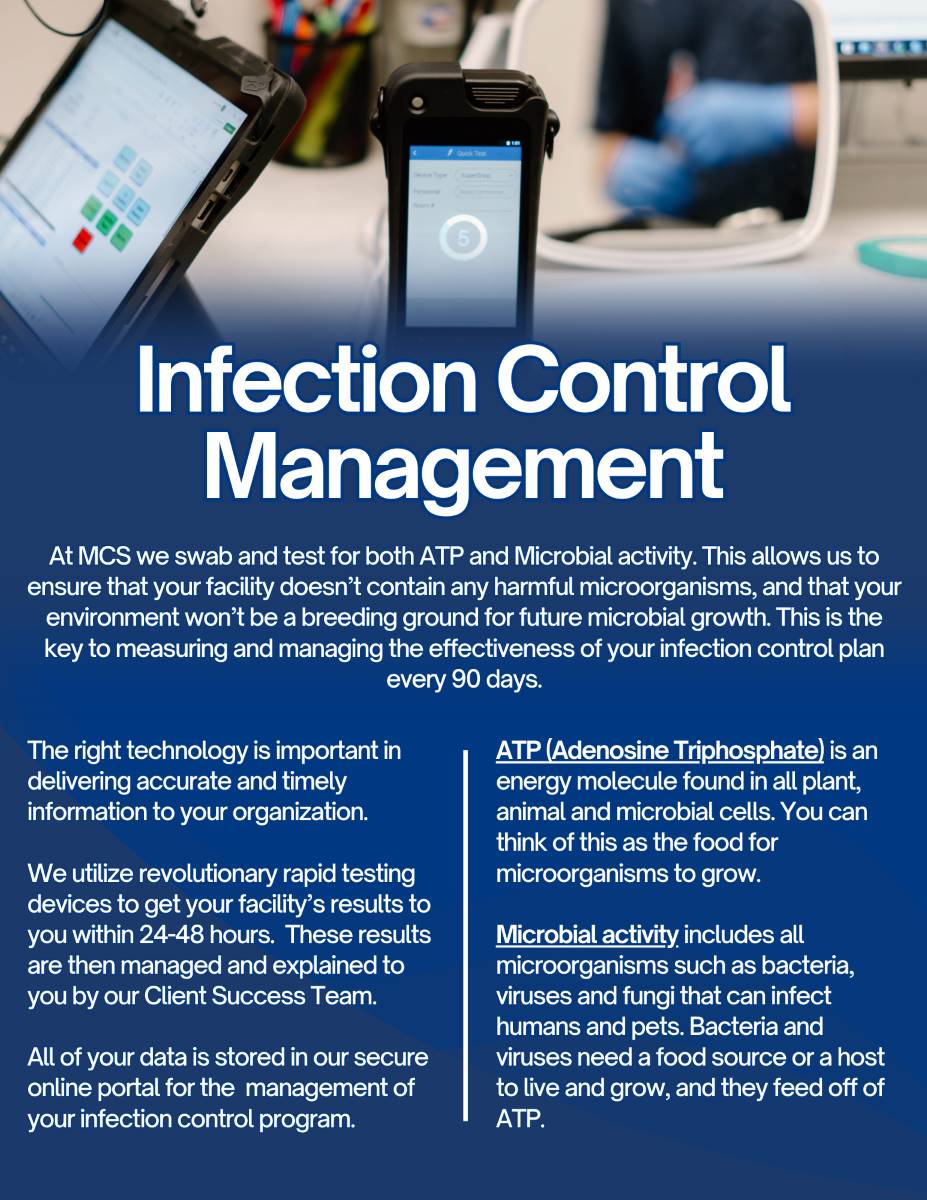
There’s a parallel issue lurking beneath the paperwork problem, and it’s backed by published clinical research. Studies comparing a visual walkthrough against objective testing consistently find that the eye overstates cleanliness. In one 2021 study appearing in the American Journal of Infection Control, surfaces judged clean by visual inspection 87.5% of the time passed adenosine triphosphate (ATP) testing only 26.6% of the time, with virtually no statistical relationship between the two results. A separate multi-hospital study conducted across England and Wales reached a similar conclusion using thousands of surface assessments. The takeaway holds across settings: a surface that looks clean and a surface that tests clean are frequently two different things.
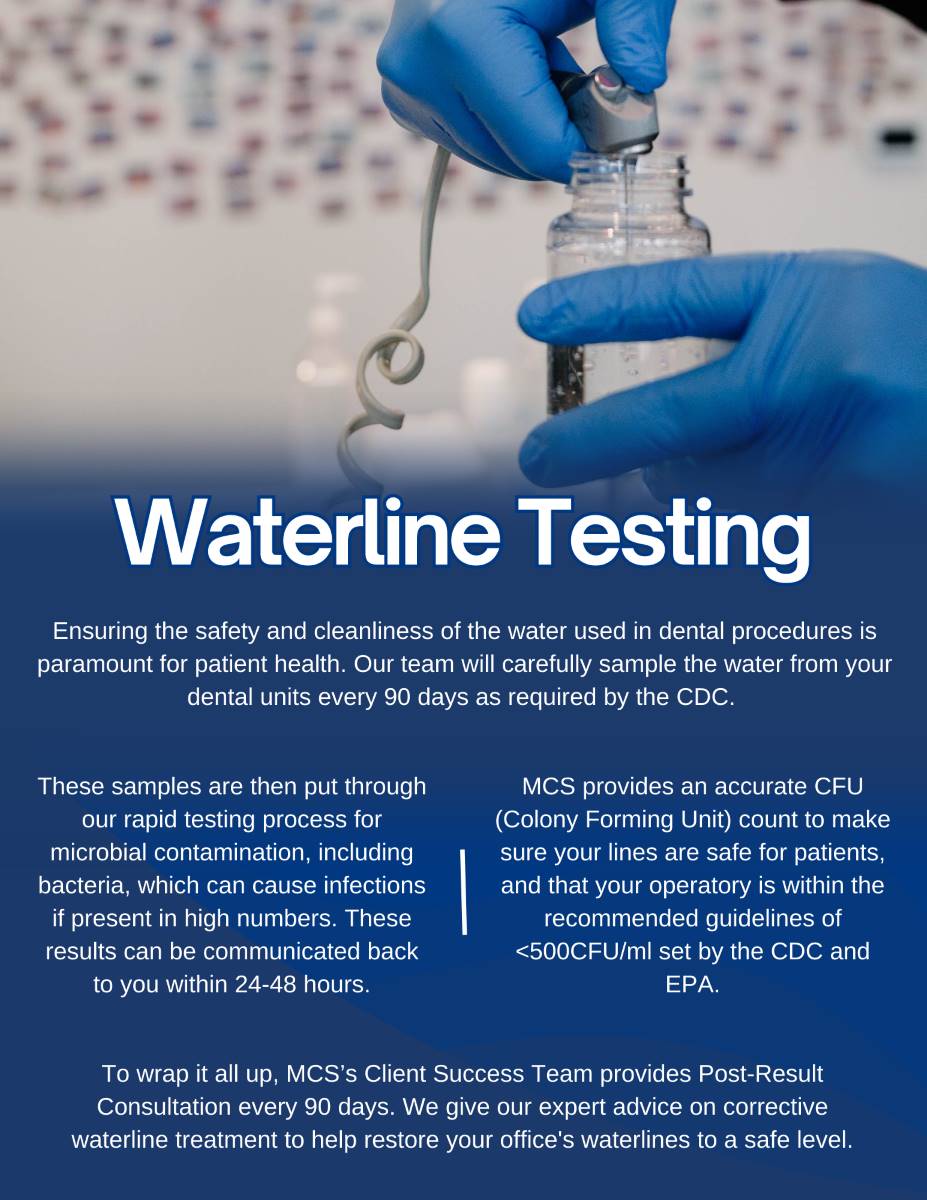
This is the evidence pushing regulators and infection-control experts toward measurable methods, ATP swabs, microbial cultures, waterline sampling, instead of relying on checklists initialed at the end of a shift. A signed form confirms someone followed a process. A test result confirms the process worked.
What This Means for Your Practice Right Now
Most offices already generate everything an inspector will ask for. The training records exist. The testing results exist. The exposure control plan exists. The problem is where they live: a binder in the back office, a shared drive nobody updates consistently, a folder of vendor emails, a spreadsheet someone built two office managers ago. None of that is a missing program, it’s a scattered one, and scattered records take exactly as long to assemble as an inspector is willing to wait, which today is rarely more than a few minutes.
What a Single Digital Repository Actually Solves
A comprehensive online infection-control and compliance platform addresses this at the root by giving a practice one place where every regulatory record lives, training completions, sterilizer spore test results, waterline data, exposure control plan revisions, safety data sheets, each timestamped automatically and reachable by anyone authorized to look. That single point of retrieval is the whole game during an inspection: instead of routing a request through three people and two systems while an inspector waits in reception, whoever is responsible for compliance can pull every relevant record in the time it takes to open a laptop.
The advantage compounds because these systems typically flag what’s coming due before it becomes a violation, a certification about to lapse, a spore test that’s overdue, a safety data sheet that needs updating for a new product. That shifts a practice from reactive, producing evidence only when asked, to proactive, knowing its exposure before anyone asks. And because the same records can satisfy OSHA, the state dental board, and the county health department at once, a practice stops maintaining three separate recordkeeping habits and instead maintains one that answers to all three.
For practices with more than one location, or with turnover in whoever handles compliance, a digital system also solves a continuity problem paper never could: institutional knowledge doesn’t walk out the door when the person who built the binder does. Whoever steps into that role next can see exactly what’s been done, what’s due, and what’s missing without reconstructing years of history from file folders and inherited spreadsheets.
None of this replaces the clinical judgment or the actual infection-control work happening chairside, a platform records the practice, it doesn’t perform it. What it changes is whether that work is visible and provable the moment someone asks. Given how often someone is now asking, that visibility is quickly becoming the difference between a routine visit and one a practice would rather forget.
Take Stock Before an Inspector Does
Before your next inspection finds it for you, take fifteen minutes to answer one question honestly: if someone walked in today and asked for every piece of your infection-control documentation, could your team produce it before they finished their coffee? If the answer is “it depends who’s in the office” or “give me a day,” that’s worth addressing now. In Part 2 of this series, we’ll put a dollar figure on what that gap actually costs, a number that climbs quickly once OSHA, HIPAA, and payor audit exposure are added together. In the meantime, reach out to a compliance documentation specialist for a complimentary readiness review, a walkthrough of exactly where your records stand across all three regulatory tracks and what a fully audit-ready system looks like in practice.
About MCS
MCS is a leader in infection control solutions, dedicated to helping healthcare environments create safer spaces for patients and staff. With a focus on evidence-based products, proven protocols, and hands-on expertise, MCS provides practical solutions that ensure regulatory compliance while reducing the risks of healthcare-associated infections. The company partners with practices to simplify infection control and deliver peace of mind. Explore how to upgrade your infection control strategy today. Contact MCS at info@mcsteams.com.
Sources
- ChairPulse, “Dental Office Inspection Survival Guide 2026: OSHA, State Board & County Requirements”
- UptimeHealth, “2025 Safety Standards for Dental Equipment: What’s New”
- OSHA Review, “Maryland Dental Spore Testing Requirements (2026 Guide)”
- Liles Parker PLLC, “Dental Claim Audits and Investigations Will Increase in 2026”
- Oshaguard, “OSHA Compliance Checklist for Dental Offices 2026”
- CDC, “Administrative Considerations – Dental Infection Prevention and Control”
- American Dental Association, “Infection Control and Sterilization”
- Chen Y-C, et al., “Comparing visual inspection and performance observation for evaluation of hospital cleanliness,” American Journal of Infection Control, 2021