The recent Ebola outbreak making headlines around the world is another reminder of how quickly infectious diseases can spread and how important preparation and prevention really are.
According to a recent Washington Post article, health officials are deeply concerned about the current outbreak because of several dangerous factors happening at once:
- The virus spread for weeks before it was fully recognized
- The outbreak is occurring in areas with political instability and limited healthcare infrastructure
- There is no approved vaccine for this particular strain
- Global public health systems are more stretched than they’ve been in years
While the risk of Ebola spreading widely in the United States remains low, situations like this reinforce an important lesson that applies to healthcare facilities, schools, businesses, senior living communities, and public spaces alike:
You can’t wait for an outbreak to start thinking about infection prevention.
Prevention Starts Long Before a Crisis
One of the most concerning points in the article is how much the virus had already spread before health officials realized what they were dealing with. By then, hundreds of infections were already suspected.
That’s the reality with many viruses. Whether it’s Ebola, norovirus, influenza, RSV, COVID-19, or other emerging illnesses, viruses often spread silently before people realize there’s a problem.
That’s why proactive environmental disinfection and surface protection matter so much.
At MCS, our focus is helping facilities reduce environmental risk through a specialized service designed to disinfect surfaces and provide longer-term antimicrobial protection.
Environmental Safety Plays a Bigger Role Than Most People Realize
Viruses don’t only spread person-to-person. Contaminated surfaces and high-touch areas can also contribute to transmission.
Healthcare settings are especially vulnerable because of the constant movement of patients, staff, visitors, and equipment. The Washington Post article specifically highlights how healthcare workers and healthcare environments are heavily impacted during outbreaks like Ebola.
That’s why MCS approaches infection prevention differently than traditional cleaning services.
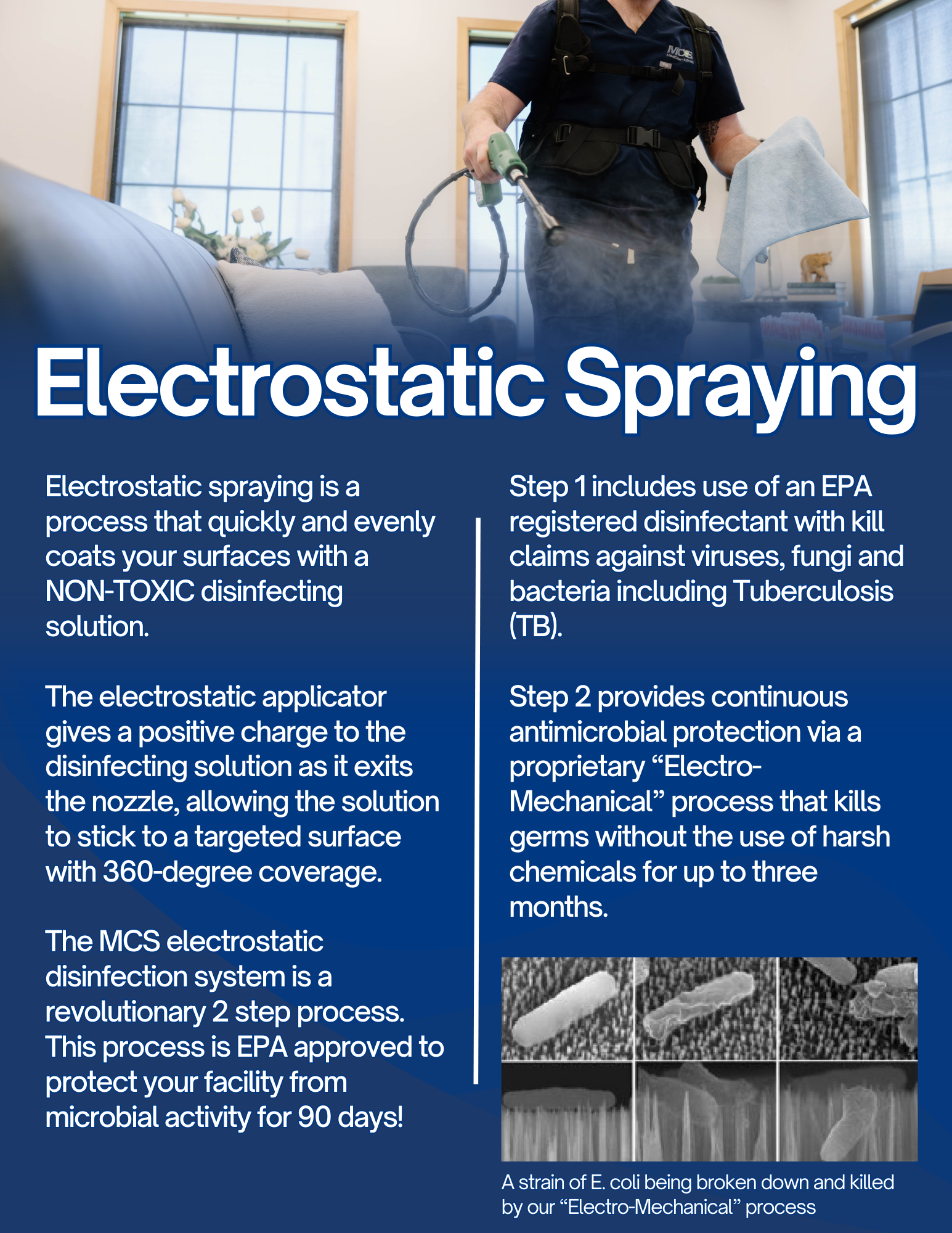
MCS is not a daily janitorial or housekeeping provider. Instead, MCS delivers a specialized quarterly electrostatic spraying service using a non-toxic two-step application process that:
- Disinfects surfaces
- Applies an electromechanical antimicrobial barrier
- Helps provide ongoing surface protection for up to 90 days
The electrostatic application process allows the treatment to evenly coat surfaces and hard-to-reach areas, creating more consistent coverage throughout the environment.
The goal is simple: help facilities create safer environments while adding another layer of protection between routine cleaning cycles.

Measuring What “Clean” Really Means
One of the biggest challenges in infection prevention is that surfaces can appear clean while still harboring contamination.
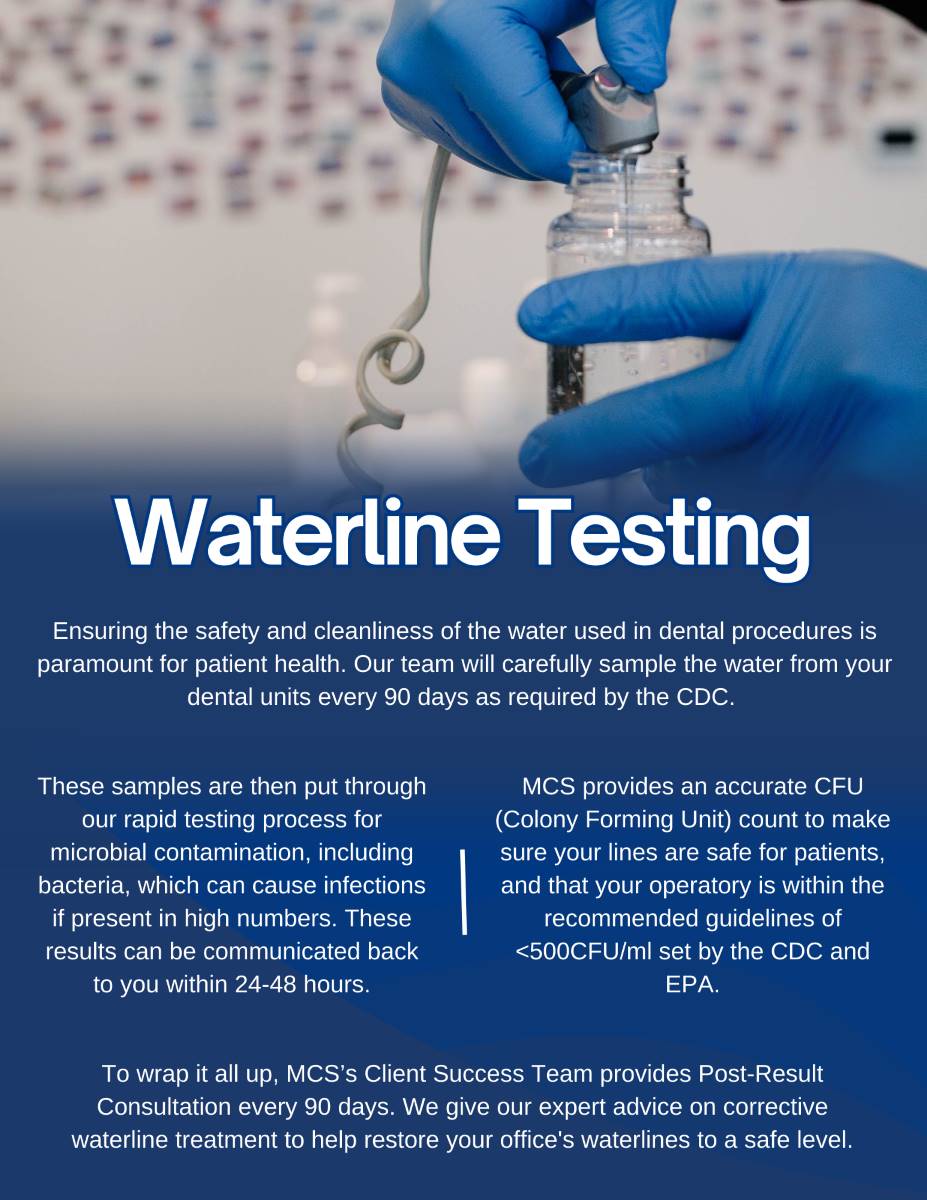
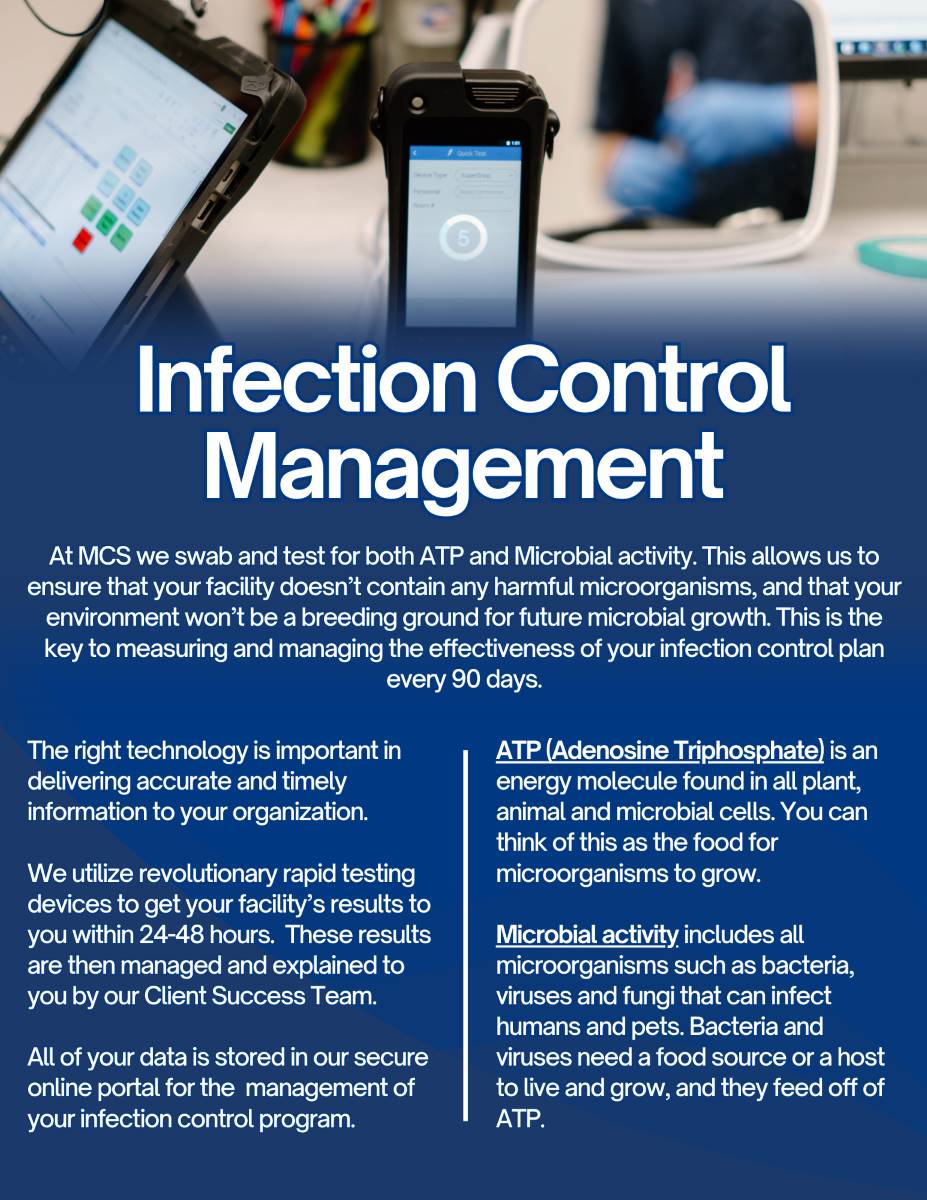
That’s why MCS incorporates both ATP and microbial testing as part of its service validation process.
Pre-spray and post-spray testing helps facilities measure the effectiveness of the treatment and better understand environmental conditions within their space.
ATP (adenosine triphosphate) testing measures residual organic material left behind on surfaces. This provides fast, measurable insight into surface cleanliness before and after treatment.

Microbial testing helps identify bacterial and microbial presence in targeted areas, providing additional validation of environmental hygiene and treatment effectiveness. Together, these testing methods help facilities:
- Validate the effectiveness of the MCS service
- Identify higher-risk areas
- Support infection prevention initiatives
- Improve environmental monitoring
- Provide measurable data and accountability
In environments where health and safety matter, measurable results provide added confidence.
Infection Prevention Is a Journey
Infection prevention is not a one-time event or temporary response—it’s an ongoing journey.
Viruses and pathogens continue to evolve, which is why facilities need layered strategies and proactive solutions that support long-term environmental protection.
At MCS, we believe combining advanced electrostatic disinfection technology with measurable ATP and microbial testing helps facilities take a more proactive approach to infection prevention rather than simply reacting after problems arise.
Every treated surface, every validated result, and every proactive measure contributes to a healthier and safer environment for patients, residents, staff, visitors, and customers.

A Safer Environment Builds Confidence
People notice when facilities take health and safety seriously.
Patients, residents, staff, visitors, employees, and customers all want confidence that the environments they enter are being proactively protected.
At MCS, we believe infection prevention is about more than appearance – it’s about helping organizations create safer spaces through advanced disinfection technology, long-term antimicrobial surface protection, and measurable validation.
Global outbreaks like the one currently unfolding serve as an important reminder that infection prevention is not just a healthcare issue – it’s an operational priority for every organization committed to protecting people.
Source: “Why this Ebola outbreak will be so difficult to contain,” Washington Post, May 19, 2026.
MCS helps dental and healthcare facilities become safe places for patients and staff to work and seek medical and dental attention. We help our clients by not only providing long-term disinfecting and infection control protection solutions for their facilities, but also by testing and verifying the cleanliness of those facilities. Every office we have been in has had some level of contamination, and our clients have seen a 100% decrease in microbial activity and an average decrease of 75% in their ATP levels. If you would like help in getting your office cleaner and safer, and have objective verifiable data to prove it, call us today at 469-778-7550 or contact us here.