Ask any dental practice owner how infection control is going, and you’ll almost always get the same confident answer: “We’re compliant.” Staff are trained. Checklists get signed. Surfaces get wiped down between patients. On paper, it all checks out.
But here’s a question worth actually sitting with for a second: how do you know your cleaning is working? Not “it should be working.” Not “it’s always worked before.” Actually working, right now, today, on the surfaces your patients are about to touch.
That question is where compliance and verification stop being the same thing. And honestly, this gap shows up in almost every practice we talk to, no matter how careful or well-run the team is. It’s not about anyone doing a bad job. It’s that most practices have never had an easy way to measure what they assume is true.
What Most Practices Are Actually Relying On
If you look closely at how the average dental office keeps tabs on its infection control protocols, it usually comes down to three things:
- Visual inspection – does the surface look clean?
- Checklists – did we mark off that the step was done?
- Staff sign-offs – did someone initial it?
All three are useful. None of them, however, actually tells you whether contamination is present or gone. A surface can look spotless and still be carrying a bacterial load well above what’s acceptable. A checklist can be filled out perfectly and still miss that a wipe-down didn’t sit long enough, or that the disinfectant wasn’t even the right one for the job. A signature confirms a task happened. It doesn’t confirm the task worked.
That’s really the whole problem in a nutshell: these methods measure activity, not outcomes.
If you want to see just how far that contamination can spread without anyone realizing it, this short video is worth watching. It uses a red dye to trace what actually happens during a routine dental exam, revealing contamination that would otherwise be completely invisible to the naked eye. Watching it makes the point better than any statistic can: what you can’t see is still there, and it’s spreading further than most teams would ever guess.
Compliance Tells You What Should Happen. Verification Tells You What Is Actually Happening.
That line is worth pinning up somewhere in every operatory.
Compliance is the intention side of things: the protocol, the training, the paper trail showing a process was followed. It answers questions like: Did we train our staff? Do we have a written protocol? Was the checklist filled out today?
Verification is the evidence side. It’s a different question entirely: Is the protocol actually doing what it’s supposed to do? Is the surface actually free of detectable organic residue? Is the waterline actually within safe limits? Is the surface actually clean by some measurable standard, not just by how it looks?
Here’s the part that surprises people: a practice can be fully, genuinely compliant and still have a verification gap. Most do. It’s not a failure of effort. It’s just that visual checks and checklists were never built to catch what’s happening at the microbial level, because human eyes can’t see bacteria, and a checklist can’t measure contamination no matter how carefully it’s filled out.
The Research Backs This Up
This isn’t just something we’ve noticed anecdotally, it’s backed by published research. Carling and Bartley’s 2010 study in the American Journal of Infection Control, “Evaluating hygienic cleaning in health care settings: What you do not know can harm your patient,” looked directly at this question in clinical environments and found that visual inspection is a poor predictor of whether a surface has actually been cleaned effectively. A surface can pass the eye test and still fail an objective contamination check.
That disconnect is exactly why hospitals and healthcare systems have shifted toward objective tools: ATP bioluminescence testing, microbial surface testing, and similar methods to actually validate their environmental hygiene programs instead of just assuming they’re working. (You can read the full study here: ajicjournal.org.)
Dentistry hasn’t caught up to this the way hospitals have. Not because the science doesn’t apply, but because objective verification tools simply haven’t been part of the standard dental toolkit until recently. That’s starting to change.
So What Does Verification Actually Look Like?
None of this is complicated, and none of it replaces what your team is already doing. It just confirms it. In practice, that usually means:
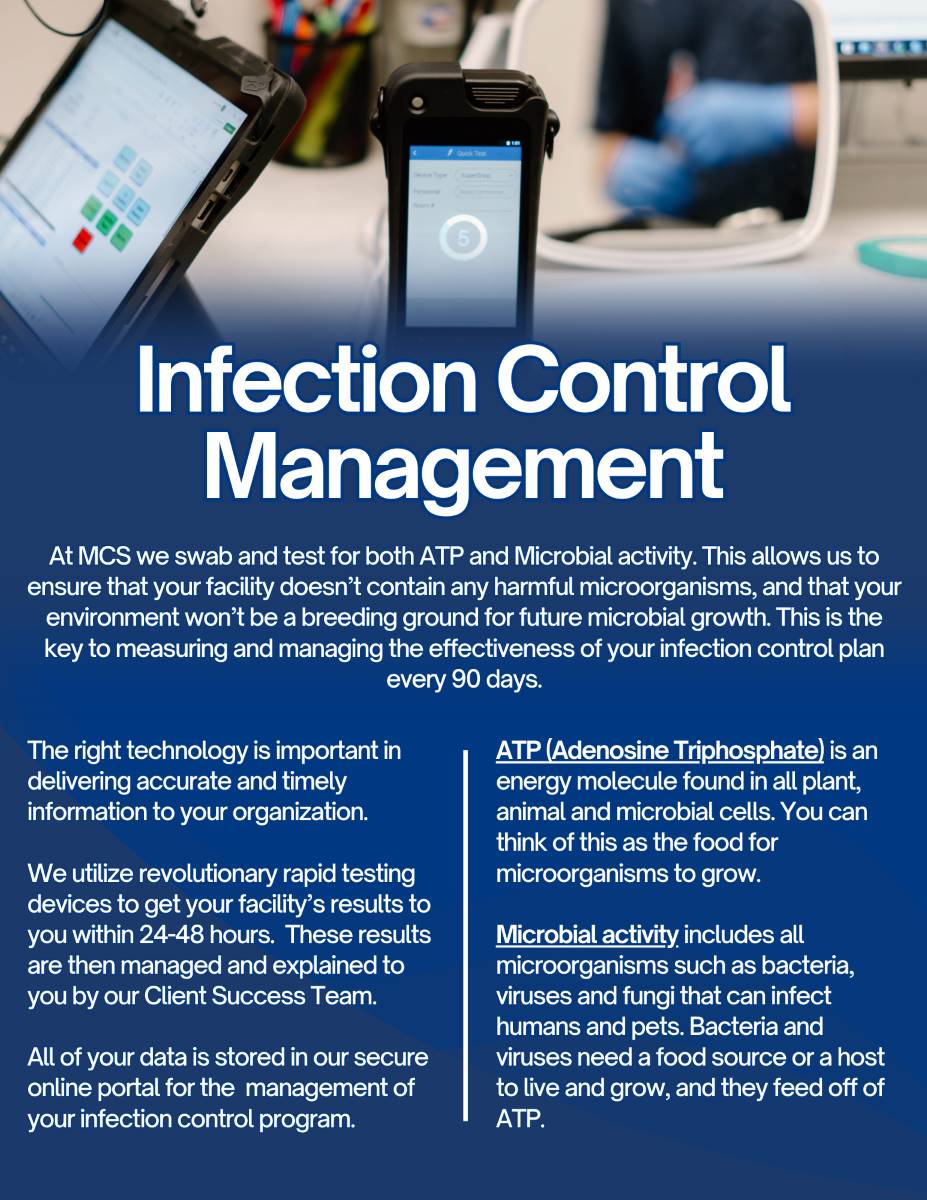
- ATP testing – a quick, quantifiable read on organic residue left on a surface right after cleaning. You get a number, not a guess.
- Surface microbial testing – culturing surfaces to catch bacteria the naked eye simply can’t see.
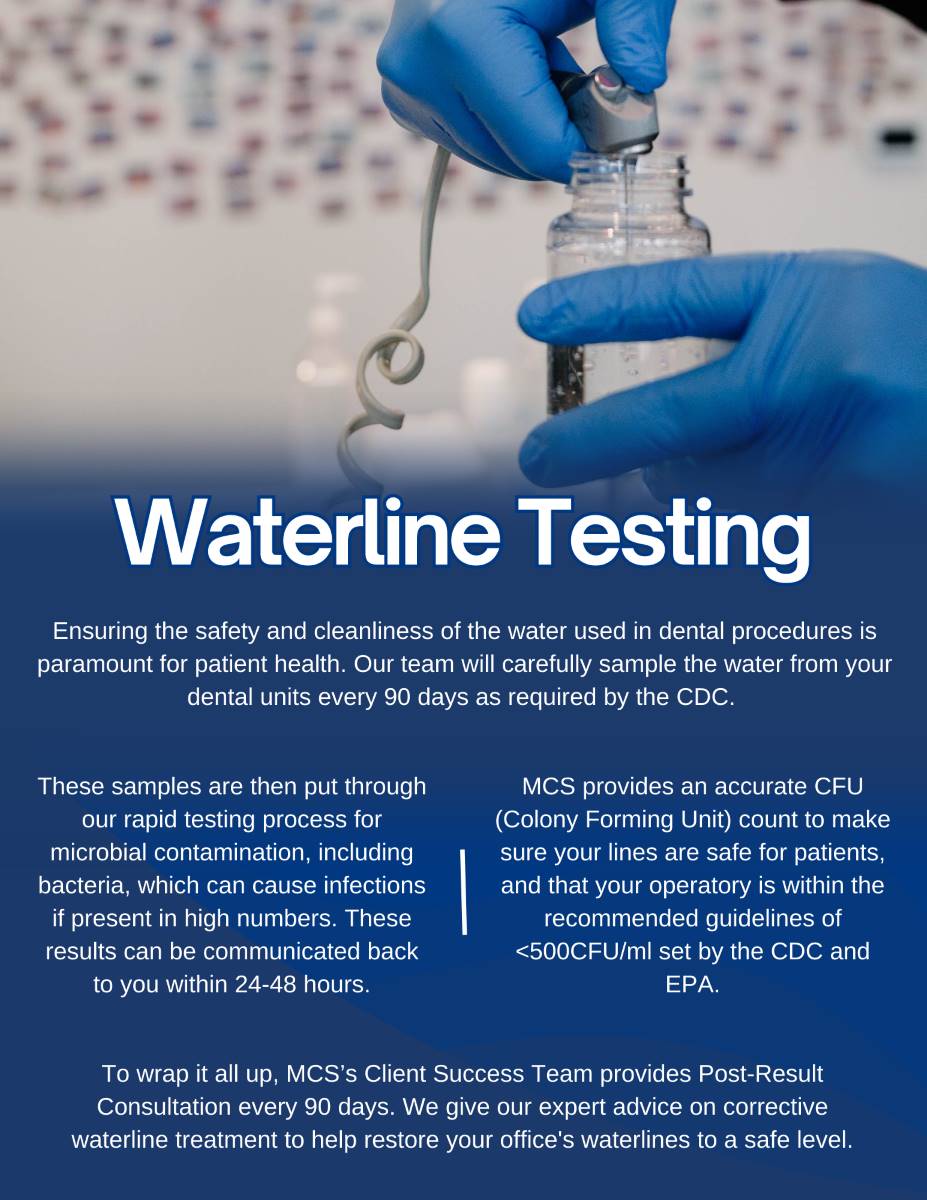
- Waterline testing – checking dental unit waterlines, one of the most commonly overlooked contamination sources in any office, against established safety thresholds.
- Digital documentation – pulling all of that data into one place so it can be tracked over time and pulled up instantly if you ever need it.
Put together, these tools take infection control from “we assume it’s working” to “we know it’s working, and here’s the data to prove it.”
Why This Actually Matters
Think about the scenario nobody wants to deal with: a state inspector shows up, a patient raises a concern, or there’s a post-treatment infection scare. In that moment, “we followed our checklist” is a much weaker position than “here’s the data showing our surfaces tested clean and our waterlines were within safe limits on that exact date.”
Verification isn’t just about protecting patients, although that’s obviously the main reason it matters. It protects the practice too. It turns infection control from something you trust into something you can prove. And it gives the whole team real peace of mind, instead of the kind of confidence that comes from “we’ve never had a problem”, which is true, right up until the day it isn’t.
We're Not Replacing Your Program. We're Validating It.
None of this is a knock on the work dental teams already put in. Most practices are training staff, disinfecting diligently, and doing exactly what they’ve been taught. The issue was never effort, it was visibility. You can’t verify what you’ve never measured, and up until now, most practices haven’t had a simple way to measure it.
That’s the real value objective verification brings: not a replacement for your infection control program, but proof that it’s doing what you believe it’s doing. Compliance shows intention. Verification shows evidence. And as patient expectations and regulatory scrutiny keep climbing, evidence is what actually holds up when it counts.
Where to Go From Here
If you’ve never actually tested your own protocols, that’s worth changing. Ask a few honest questions about your own practice: When was the last time you measured cleaning effectiveness with something other than your eyes? Could you hand an inspector objective proof today, not just a signed checklist? Do you know what’s actually in your waterlines right now?
You don’t need to overhaul anything to start closing this gap. Look into ATP testing, microbial surface testing, and waterline testing as options, and consider building a baseline so you have something to measure against going forward.
Better yet, talk to an infection control specialist who can evaluate your current protocol against objective, measurable standards, not just visual checks and checklists, and help you build a program backed by real data instead of assumptions. The goal isn’t to second-guess your team, it’s to give them, and yourself, the evidence to know for certain that what you’re doing is actually working.
About MCS
MCS is a leader in infection control solutions, dedicated to helping healthcare environments create safer spaces for patients and staff. With a focus on evidence-based products, proven protocols, and hands-on expertise, MCS provides practical solutions that ensure regulatory compliance while reducing the risks of healthcare-associated infections. The company partners with practices to simplify infection control and deliver peace of mind. Explore how to upgrade your infection control strategy today. Contact MCS at info@mcsteams.com.